Sunday, January 14, 2007

fierce kitten hoops

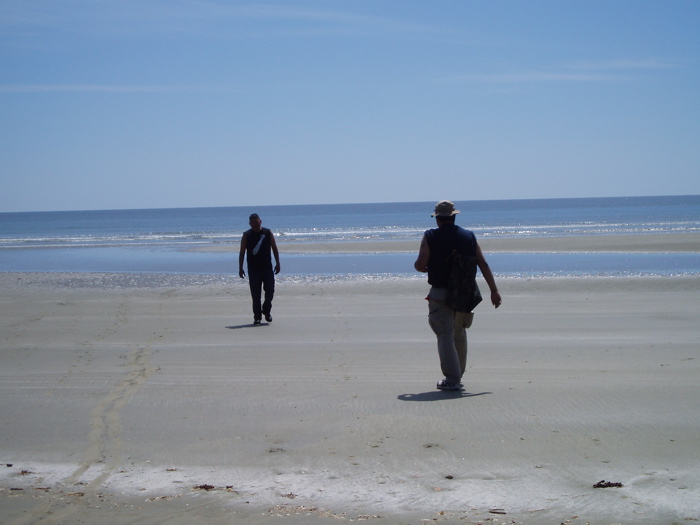
Today, I played some hoops for the first time in awhile (I think the second time in a year). Kitten (a protege from the Nass) and I played these two foreign exchange students and lost 11-5. Then Kitten beat me at a game of Twenty-One, 21-3. Then I schooled her one-on-one. I was up 10-2 before we stopped and she beat me at Twenty-One again, this time 21-20. You think I would rule the paint, but the Kitten is fierce inside and knows how to use her elbows.

Stay tuned sports fans...I think I might try some lacrosse this year. My friend, Chii-a-is likes to say, "the boys of summer play baseball, the men of summer play lacrosse."

Thursday, January 04, 2007

It's official...

The W you all know and love is a nerd. Now this is not to be mistaken for a geek. According to Old Man Rivers, there is an important distinction. Nerds watch BSG, Geeks watch Star Trek. I finally received all my grades back from my recent return into the land of ivory towers: A, A-, B, and A+.

Yeah, I was dissapointed in the B too, but I take full responsibility. I shall make amends this semester. Watch out fellow nerds...Dubya is on a rampage.

Wednesday, December 27, 2006

Listening to...


Somebody That I Used To Know (by Elliott Smith)

Monday, December 18, 2006

almost there...

One more exam, English 395 (Literature of the First Peoples) at 7pm tonight! Wish me the swiftness of your favourite deities, spirits or animals.

Sunday, December 03, 2006

Film Review: Kanesatake: 270 Years of Resistance

another assignment, this one for English 395:

When the “Oka Crisis” came to national attention on July 11th, 1990, I was 17 years old. I distinctly remember an overwhelming desire to grab my father’s old 30-30 rifle and jump on a bus to join my brothers and sisters in arms. Admittedly, I was not very politicized at the time and not particularly strong in my indigenous identity either, but like my good friend Terry likes to say, “I was born at Oka.” 16 years later, and Alanis Obomsawin’s documentary film, Kanesatake: 270 Years of Resistance still manages to evoke a powerful, visceral response. The dispute over the Pines at Kanesatake encouraged crisis solidarity unseen since the 1969 White Paper and created significant political space, resulting in the Royal Commission on Aboriginal Peoples and in British Columbia, a billion dollar treaty process.

The actions of the Mohawks also inspired a new generation of warriors and radical indigenous political thinkers. Obomsawin’s imagery and narrative inspire indigenous people to stand up and fight and non-indigenous people to question not only their governments but also the very nature of the country they live in. We are presented with jarring visual juxtapositions: familiar moments of humanity and family, against the cold, unfeeling apparatus of the state. While the David and Goliath nature of the struggle is not lost on the viewers, Obomsawin also manages to contrast the very tangible humanity of the indigenous protesters with the inhumanity of the state law enforcement, military and political institutions. The death of Corporal Lemay and the occasional interaction with various Canadian soldiers are brief exceptions, but the overwhelming impression presented is that of reasonable indigenous families compelled to act and an unreasonable, draconian, and faceless state.

Despite the truth-telling nature of documentary filmmaking, and the even-handed impression enhanced by Obomsawin’s calm, unassuming narrative, this is not an objective piece of work. She is clearly telling the story from the point of view of the Mohawks and it is a story that needs to be told. Ironically perhaps, the Oka Crisis occurred around the same time as the first Gulf War, which ushered in a new era of information warfare and media manipulation. Films like Kanesatake: 270 Years of Resistance are more important than ever, in preserving the point of view of the oppressed, and providing inspiration for anyone who desires peace, dignity and justice.

Friday, December 01, 2006

the father of liberalism and us po' indians

an assignment from my POLI 300B class:

“God gave the world to Adam and his Posterity in common,” states John Locke in Chapter V of his Second Treatise of Government. With man’s dominion over the world and its bounty divinely granted the stage was set for the subjugation of Indigenous peoples and the theft of their lands. Locke’s view on property is rooted in man’s inalienable property in his self and his labour. By extension, “Whatsover…he hath mixed his Labour with…thereby makes it his Property." Locke goes beyond the previously accepted doctrine of Terra Nullus. His views on property, dominion and appropriation were an advance in colonial thinking.

Like many of his contemporaries, Locke believed that America was a land of unlimited plenty. He uses the analogy of one man drinking from a river and the negligible impact on another’s ability to drink from the same river. Further, Locke believed that man’s right to subdue, cultivate and improve the earth through his labour granted him the right of appropriation. And while his logic recognized the Indian’s right to that which he hunted or fished, Locke believed that the Indian of the Americas wasted the land he occupied. He believed the Indigenous ways of life and political organization to be inferior to that of the European stating, “There cannot be a clearer demonstration of any thing, than several Nations of the Americans are of this, who are rich in Land, and poor in all the Comforts of Life; whom Nature having furnished as liberally as any other people…”

Interestingly, this rationalization did not prevent the forced removal of the semi-sedentary, corn-farming Kanienkeha people who once lived where the city of Montreal is now located. This is indicative of the circumstantial nature of all colonial rationalizations. Despite thoughtful philosophy and the damage caused and/or justified, one cannot ignore the reality of colonial “necessity.” The modern reality and legacy of colonialism is that it has become increasingly inconvenient, morally and economically, for state governments in the Americas to truly reconcile with Indigenous people.

Tuesday, November 28, 2006

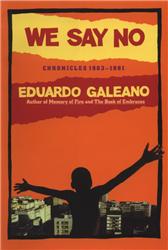
we say no

I may have written about this book before, or at least referred to it, but I think it's worth another look. As I was looking for a profound quote to end my paper on Latin America-U.S. relations I kept coming back to Galeano's We Say No. I found it not only relevant for my term paper, but also for us Indigneous folks in these parts of the Americas (occupied British Columbia). Specifically, because of the current BC Treaty Process, and the most common criticism levelled at dissenters: "It's not enough to just say 'no.' You have to come with solutions." Well, to a group of under-resourced people this is a tall order, but I and Galeano agree that sometimes it is more than enough to just say no, especially when the consequences are so significant and far-reaching. Here are some excerpts from his talk, We Say No (originally given at a gathering of rebellious intellectuals in Chile in July, 1988) from the book of the same name:

(translated by Cedric Belfrage)

We have come from different countries, and we are here - reunited under the generous shade of Pablo Neruda - to join the people of Chile, who say no.

We also say no.

We say no to the praise of money and of death. We say no to a system that assigns prices to people...We say no to a system that neither feeds its people nor loves them, that condemns many to hunger for food and many more to a hunger for the embrace...

We say no to the lie...

The colonial inheritance obliges the so-called Third World (and Fourth World!) - populated by third-class people - to accept as its own the memory of the victors who conquered it and to take on its lies of others and use them as its own reality. They reward our obedience, punish our intelligence, and discourage our creative energy.

We say no to fear. No to fear of speaking, of doing, of being...

As it happens, we are saying no, and by saying no we are saying yes... By saying no to the devastating empire of greed, whose centre lies in North America, we are saying yes to another possible America, which will be born of the most ancient of American traditions, the communitarian tradition that the Chilean Indians have defended, deperately, defeat after defeat, during the last five centuries.

In saying no to peace without dignity, we are saying yes to the sacred right of rebellion against injustice and its long history as long as the history of popular resitance on the long map of Chile.

By saying no to the freedom of money, we are saying yes to the freedom of people: a mistreated and wounded freedom, a thousand times defeated as in Chile and, as in Chile, a thousand times arisen.

Tuesday, November 21, 2006

knowing my place


(originally published on my myspace page Nov. 15, 2006)

I'm feeling particularly polemical today. It might be a combination of new tunes (mostly courtesy of Fish), reading about colonial bullshit from here (in Occupied Canada) to South America, co-optation everywhere and the pressure to go along and get along. Ya Basta (Enough) I say! I know I will not get my way 100% but that does not diminish the need for so-called radical or uncompromising positions. I do not pretend to be in a position to have a final say on much of anything, but while the blood of my ancestors continues to flow through my heart I will fight for what I believe to be true and righteous. I know this will attract criticism and allegations of essentialism but I know my place. It has become more and more clear over the years, despite constant pressure and temptation to be diplomatic and "nice."

My mom, bless her heart and love, once lamented my politics primarily because she believed that they would lead me toward a life of depression and frustration. I thought about it for a few moments and replied that if I did not act on what was in my heart, I would truly be depressed and frustrated. The role of the rebel is a calling. It is at times a lonely road, plagued with doubt and fear but it is also paved with hope and dignity, for we know that life is more than mere existence. Life is indeed precious. Specifically, it is precious in how we live it, how we walk with our families, friends and enemies. I do what I do because I believe there is no other way for me. My fate is intertwined with the fate of my people. Viva la rebellion!

Tuesday, November 14, 2006

Escapism

I've been thinking about the nature and ethics of escapism, not only in my life but in the lives of my fellow Indigenous revolutionaries. By escapism I mean everything from day dreaming to playing video games, to watching movies to mind-altering substances, to mererly unplugging, to taking off to the other side of the world. My methods of escapism? Well since my cell phone's been cut off, I have to admit it's nice to not be as reachable as I used to be. I have an old fashioned phone line with NO FEATURES whatsoever, so when I'm on the phone and people call, they get a busy signal. When was the last time you heard one of those? And instead of voicemail, I have an answering machine with the bad sound that I bought from the Salvation Army thrift store for $3.50, which I have not figured out how to check remotely yet. Riding my motorcycle at times used to be a form of escapism for me, but since I'm not riding it this winter, about all I have is a bus ride and my iPod. Speaking of iPods, music often does it for me, especially when accompanied by a hot tub and a glass of red wine (did I just type that? ahem...in attempting to recover some sense of machismo, I'm evoking images of Tony Montana, smoking his cigar, watching TV saying, "c'mon pelicans" - when they were really flamingos...lol).

The other reason I was reminded of this issue was recently I've heard from a few rebellious sorts talk of how nice it felt to be away from the "bullshit politics" or enjoying the comforts of a full time job for a change. Now I recognize there are a several emerging issues here and I do not intend to engage them all at this time, however you are more than welcome to. Often, we are frustrated with the current state of affairs, the "bullshit politics" that we decide to disengage or work to find another way. The latter, as many of you will already know, can be a supreme exercise in frustration and seeming futility.

It is not my place to judge for I've been as guilty as the next if we call it that. Perhaps, being human is more accurate.

I believe, especially at times like these, that we need to be able to turn to one other for support. Each of us on our respective paths believe in some common things - freedom, dignity, hope, family. And being on seperate but parallel paths, we are often in a position to help one another. When one is weak the other is strong and so forth. This has been my experience anyway. I don't have the answers. This is more of my own expressions of dispair and hope. What I can tell you is this, if I can be there to help, to give some hope, or merely be a person who can listen with empathy and compassion, I will. I will endeavor to grow stronger so that I can be there for you, my fellow rebels, because I know many of you have been there for me already.

kleco, kleco!

W

Wednesday, November 08, 2006

on university life and other musings

Well, I have completed most of my mid-term exams (with the exception of my East Asian Politics take-home exam that I am working on at this very moment), and despite my worst fears, I am doing fairly well, although I can't believe I got (only) a B+ on my critique of Thomas King's The Truth About Stories! ):I Perhaps my closing line, "The truth about Thomas King is he has great appeal for non-indigenous people" went too far. :I

aaniikwaa

Despite some initial anxiety about failure, I am really enjoying school. I feel like this is where I want to be at this very moment, which is rarer than you might think. In spite of many important and pressing issues at home (Ahousaht/Kitselas/Kitsumkalum), I am taking this opportunity to finish what I started 15 years ago as well as taking the time to devote a majority of my time to thinking through many of the issues related to decolonization and regeneration.

For some of you, this will seem counter-intuitive, especially those of you who have been exposed to my revolutionary rhetoric over the years. I've thought about this a great deal, and in no small measure considering my mentor-protege relationship with Old Man Rivers, and have concluded that this is indeed where I am supposed to be right now. When I am done, my priorities may change but when considering my assets, and how I may best contribute to the revitalization of my communities, indeed some thinking time is good.

I realized this morning that I have now been living on my own for the FIRST TIME EVER, for 38 days now. Again, this may be hard to believe but it is true and I think I'm learning some valuable lessons and insights from the experience. On my 101 in 1001 list I (somewhat jokingly) stated that one of my goals was to live on my own for at least 30 days. woo hoo! 3 cheers for baby steps.

I recently returned from a trip to Portland, OR where my cousin Hiish-miik had an art show opening at Quintana Galleries. When I get the chance I will post some pictures from our trip south of the 49th into occupied Chinookian territory. As I gather it did up here, it rained and rained almost the entire time we were there. The art show went well and will continue for another two months I believe...check it out (at least online) if you get the opportunity.

After a Denny's breakfast (:p) we managed to locate what I often refer to as, "a funky, hippyish but not too hippyish (meaning they have to have meat too), restaurant that caters to healthy, left-leaning intellectuals"...haha. Think The Blue Fox in Victoria or Slickety Jim's in Vancouver. Next, we went looking for guy toys (things that go "bang" all day long) much to the understandably finite patience of our female companera. And while we could not manage to locate an authentic Indigenous watering hole (jedi/pirate debate aside) I did manage to spend some time at Powell's Books. If you have any bookish inclinations whatsoever and find yourself within 100 miles of it, I highly recommend you find your way to this city-block-sized bookstore full of new and used books. I could have spent days, perhaps weeks in there. One example that illuminates the broad selection is that I found over 20 books specifically on Fidel Castro when try as I might, looking in every bookstore I can in this land now called Canada, I have never found one. I also found hundreds of books on history, Indigenous issues, Latin America, colonization, political and social issues. Check it out.

And my final thoughts for today. I recognize that I am in a special place of privilege to be in school full time, and for that I am grateful. At the same time I am adjusting to and truly appreciating the perspective that comes with the modest living of the student experience. I am especially grateful to my friends and family who have been so supportive, through encouragement as well as donations of fish and other material support. And...I hope to be picking up some Tliina later this week from a Nisga'a friend of mine. Woo hoo! :d

Oh, and last but not least, congratulations to the most recent IGOV graduate who successfully defended her MA thesis this morning! Great job Vanessa!

Viva la rebellion mi companeras y companeros!

Tuesday, October 24, 2006

Duncan Campbell Scott: a Visionary Canadian Bureaucrat

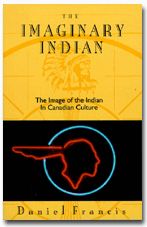
In a report at the conclusion of Treaty 9 negotiations, Department of Indian Affairs chief bureaucrat, Duncan Campbell Scott commented, “Do not think…that civilizing the Indian is the work of one generation, or even two. It might take as long as four centuries before Indians merged with Whites and ceased to exist as a distinct people” (p. 199). In Chapter 9 of The Imaginary Indian, author Daniel Francis succinctly summarizes Crown policy directed at the Indian problem from the early days of British military necessity to the egalitarian-minded albeit misguided White Paper of Pierre Trudeau. Francis hints that the Indian problem went beyond the obvious clash over land and resources, “Assimilation was a policy intended to preserve Indians as individuals by destroying them as a people” (p. 201) and “Indians had to be destroyed so they could be saved” (p. 216). The very existence of indigenous people became a constant reminder of the corrupt and immoral foundations of this country. In order for non-indigenous settlers to legitimate their usurpation and occupation of indigenous lands, it required seemingly schizophrenic policies of segregation and assimilation.

The legacy of Indian policy in Canada, from the banning of significant spiritual practices to the forced removal of children from their families and the litany of abuses suffered in residential schools, is a testament to euro-centric arrogance and greed resulting in the dehumanization of indigenous people. The paternalistic approach taken by senior bureaucrats and clergy in the early days of confederation is still very much alive today in mere existence of the Indian Act and the legal doctrine of fiduciary duty. Francis believes that events since 1969 have worked to change the assimilative agenda of the federal government. I disagree.

The most significant act of indigenous resistance of the twentieth century, the so-called Oka Crisis of 1990 created an unprecedented era of co-optation and cooperation. In BC we have the BC Treaty Process and ironically, the new champion of Indian assimilation is the Indian. On page 206 there is a striking photograph of the File Hills Colony marching band. Like many photos of the era, the faces are dark and sullen and the Indians look out of place in their colonial clothing. I was reminded of an experience I had in the summer of 2003. I was a spectator at the Riverboat Days parade in Terrace. At one point the Nisga’a brass bands marched by, proudly displaying the flags of Canada, British Columbia, and the Nisga’a Lisms government (in that order). My companion, a professor from UNBC took one look at the expression on my face and said, “I guess they still have problems with colonization.”

Monday, October 16, 2006

dj dubya...

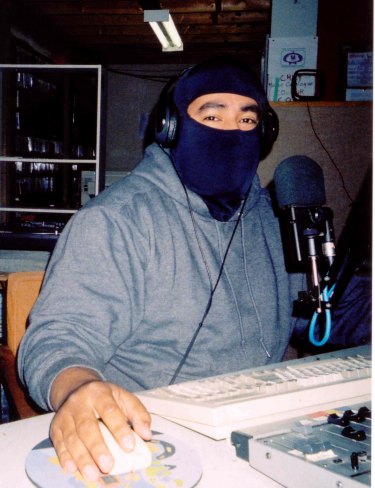
Today I stopped by the campus radio station, CFUV and have begun the process of finding out how to volunteer and apply for a program. Seeing as they have NO INDIGENOUS (not even ABORIGNAL) programming what so ever it looks good. So here is my appeal to you: Do you have any suggestions for a program name? Dubya's Hour of Power? DJ Dubya's Wild West Show? Radio Rebelde? Ya Basta? Done Gone Coastal? Son of Goin' Coastal?

I need help...

Sunday, October 15, 2006

Thursday, October 12, 2006

Ta-toos, a new pad, school and our future as Quu'as

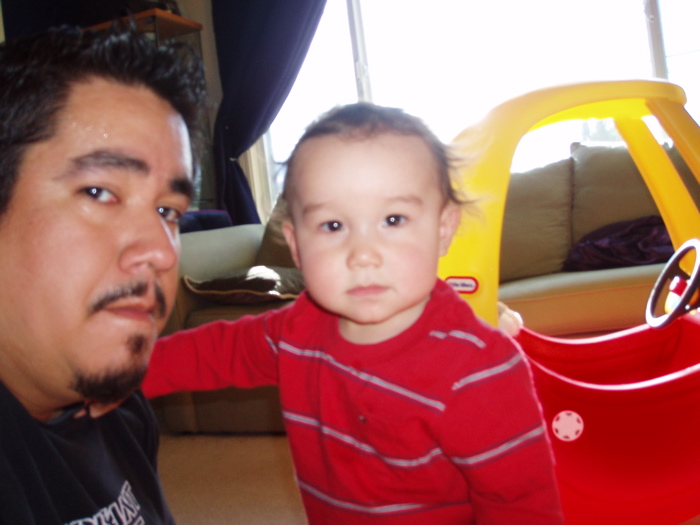
I just can't keep my nephew off this page...he's so adorable and I love the kid so much. So this past happy-colonial-turkey day we had a quiet dinner with my sis, her husband, my mom, my mom's sis, my pops and Kashus and their Scottish neighbour. I commented to a friend, that I consider it a victory that my sis and I have managed to banish brussell sprouts forever it seems, and at the very least we engage in some decolonization discussion as we munch on our free-range bird.


Kashus' Nuu-chah-nulth name is "Ta-toos" by the way, which means star. A common refrain I know, but it is hard to believe how quickly it seems he is growing. He seems less a baby and more a little boy now. Although I talk to him now, and sometimes in our language (although my father is much better at it of course) I look forward to the day when I can understand what he is saying back to me. Ta-toos reminds me that our struggle to live and thrive and rebuild our societies is a long, generational process.


As I mentioned briefly in my previous post, I have indeed found a new pad, a place to lay my hat and call my own for at least the next 6 1/2 months. It's a small 1-bedroom above and behind a flower shop on Quadra. It seems like a pretty old place as I discovered the walls were still made from lathe and plaster as I put boxes and stuff in the storage spaces. I've almost completed my unpacking and will be ready to host a book club, revolutionary meeting or poker game soon.


Earlier in the week the Nuu-chah-nulth post-secondary students were invited to an NTC-hosted dinner at Macaroni Grill (Damn the Atkins Revolution anyway!) It was good to see some familiar faces and new faces. When I discovered there weren't going to be any speeches I tried to encourage Kelly to say something and then Dawn, but alas they tried to get me to say something. I teased, by volunteering my education = assimilation speech but decided against it.

I jest but I am also serious in feeling that Indigenous students should think critically and honestly about their chosen areas of education and hopeful vocations. What are our responsibilities? Are we different than your average Canadian student? Do we owe our families, our communities? Is not only the preservation but perpetuation of a uniquely Indigenous way of life important? And if so, how do we craft such a life in the face of such strong societal and family pressures todo otherwise?

I have thought a great deal about these questions and am comfortable with my current place and role. I do generally agree that one cannot use the master's tools to dismantle the master's house (and at the same time live a life that is authentically Indigenous and yes I am aware of how essentialist this sounds). I think the decades-long trend of "running in the white man's shoes", while well-intentioned in its conception has led toward many undesirable roads and destinations. I do believe that we need to re-think our roles and directions in life and yes I willingly admit that compromise is an inevitable part of life for most people, but I still believe our ways our beautiful and we must protect and promote those core values and principles that can serve us in this modern world without losing our souls.

Friday, October 06, 2006

...brief update...

I will post in more detail soon. First, I am no longer homeless. I found a 1-bedroom apartment located above a flower shop on Quadra between Tattersall and McKenzie last Thursday and I moved in on Sunday. I don't yet have a phone or internet access but will get working on those soon. I'll post pictures of my pad as well.

Normally, I would write a diatribe on Thanksgiving and all that but I have a couple books to read this weekend and a midterm exam next week, so my polemical ways will subside for the time being.

I'm still looking for good homes for my two dogs.

I've made some new friends at school. It makes me feel 8 again. That's not necessarily a bad thing :D

The clouds and rain have seemed to find their way back to these parts. I need to pull out my waterproof riding gear soon.

Have a good weekend with friends and family, my companeros y companeras.

Wednesday, September 27, 2006

"my uncle needs a home" - Kashus, age 1

I certainly don't want to give you the impression that I am on the street. As I may have mentioned previously, I am staying with good friends. Roots and Boots and M have been gracious and warm and welcoming although another friend teased that I should have taken the hint when they got rid of the couch and replaced it with two chairs...haha...ah the floor is supposed to be good for my back anyway.

In old fishing terms, I've been skunked thus far in my search for an appropriate apartment to call my own, at least for this school year. The last place I looked at was $700/month for a bachelor suite with a fairly large storage room. I say storage room because it might be a decent bedroom for a hobbit, with the ceiling being about 5'10" and all (I'm 6'1"). The place before that was a rather large (genuine) one bedroom suite for only $600/month but the 'interview' questions I was asked got progressively weirder and weirder. Here's a sample:

What kind of routine do you keep? What time do you get up? What kind of hobbies do you have? What time do you go to bed? Do you smoke? Do you drink? Do you smoke marijuana? How often do you go to the bar? How often is not often? Do your friends smoke? Do you burn incense? Scented candles? What kind of soap do you use? How about dryer sheets?

To be fair, she who would be living upstairs did have some sort of medical condition that made her ultrasensitive to odors. Additionally, she said she sleepwalks every night and sometimes she falls down. Yeah...that and my snoring routine told me that we were not a good neighbourly match.

The search continues...

Wednesday, September 13, 2006

"living" in Mituunii

Forgive me. I have been remiss. I have been somewhat lax in both the quality and quantity of my updates this summer. In particular, I have recently become concerned with the former, especially since many of you have been so kind as to compliment me on my writing humour and style. Well, as I get into university gear with lots of reading and writing, I intend to ensure that the quality of thinking and writing here are worthy of the mundane adventures.

on school...

Week 2 is in full swing and I am still enjoying school immensely. Looking at the world we live in through anti-imperialist-docolonizing glasses is one thing, applying the same critical thought to specific classes is quite another. My long-time readers will appreciate the challenges and opportunities in the following classes: International Security (studying state system models, non-state actors, terrorism, evil doers [sorry, could not resist that one], economics, war), Early Modern Political Thought (studying Luther, Erasmus, Machievelli, Spinoza, Locke, Hobbes, Kant all the other imperialist cats from Europe - during my lecture Tuesday a summarizing thought occured to me as I listened to the professor talk of the early debates on free will and the early ecclesiastical political connections: "This all seems to be a vain attempt to rationalize imperialism"), English 395: Literature of the First Peoples, and perhaps the least contentious: East Asian Politics, although it is interesting to learn about politics from a non-eurocentric, albeit still imperialist, perspective. The trick I think will be to determine what degree I wish to challenge the assumptions of my classmates and professors. Although I shall not hesitate to speak when I feel some fundamental truth is being ignored or misrepresented, I shall also endeavor to be mindful of which battles I wish to fight.

on my homelessness...

Roots n' Boots n' M have indeed being very kind in opening their home to me, tolerating my snoring and all my totes and bags of stuff, and cooking very healthy and scrumptious meals. I hope to find a (groovy) pad of my own soon and get "settled" as well. I have NEVER lived on my own, without a girlfriend, "partner" or room mate, EVER. I'm looking forward to some domestic solitude in my life before I find the wife of my dreams and we do our part to populate the Indigenous Revolutionary forces.

on substance abuse, pirates, jedi and the movement...

You will have no doubt noticed various, vague references to "Pirates" and "Jedi" this summer. My ellusiveness is borne out of my apprehension and possibly shame to discuss the matter openly, but alas I must remain committed to the truth. These two terms were introduced to the warrior lexicon this summer to identify those warriors who live two, divergent ways: basically, Jedi are noble, strong-willed, free of substance abuse and conduct themselves with the utmost respect and dignity; Pirates are still revolutionary, but fun-loving, partying warriors, perhaps more reminiscent of the AIMsters of the 60's and 70's. We joke about Pirates with Jedi tendancies and Jedi with Pirate tendancies but really, I believe, we are one or the other. We are the sum of our beliefs and actions. I am hesitant to render judgement however, not only because I have been there myself, but also as Roots likes to say, to judge so harshly or be dismissive of our brothers and sisters is to not recognize them as a whole person deserving of more compassionate consideration.

That being said...I choose to walk the path of the so-called Jedi at this time because I believe that I cannot achieve what I want to achieve by being any other way. What I want to achieve is to play some small yet significant part in the revitalization of our Indigenous nations and people to a state of strong health, will and character, to have our children grow strong and dignified. In order to get there, I must not only be healthy to do my part, but I believe that we best serve those we love by leading by example. We must BE. This is an act of immediacy, of awareness, of now, not tomorrow or someday.

My love for my brothers and sisters, all of them has been no stronger than it is now, and despite assuming the label (from a friend who once accused me of being) Quick and Merciless, I shall not judge my comrades. It is not my place. Another pearl of wisdom from Roots is this: "Never assume that a person is unaware of the trouble they are in." As a brother, I am here for my brothers and sisters, always.

Darkness persists. The empire grows stronger. Our people are losing our ways, ways of being, Indigenous ways. Expediency and shortsightedness rule the day and the band office.

Our time is now. Our place is here.

Saturday, September 09, 2006

the not so littlest hobo

My first week of classes is over and I have to say I'm still excited about school. So much of the campus is the same as it was 12 years ago and a lot of the people (teachers and students) have changed - like that guy from dazed and confused who keeps getting older but still dates fresh(wo)men. Yeah so school is humming along just fine - the stage is set for some interesting debates with my fellow classmates and my professors but my living situation just got turned upside down. I may have mentioned that I had this house sitting gig for the month of September - this beautiful little place down by the water with a hot tub and all, well it fell through Thursday night for reasons I will not share. I'm actually typing this from my bed/Roots' couch - as Roots' and Boots and M have been kind enough to provide shelter whilst I continue to look for a pad of my own. Oh and my potential roomie situation also seems to be falling through, so I'm keeping my eyes peeled for a possible bachelor/studio setup. Here's to keepin' it simple!

Wednesday, September 06, 2006

higher colonial learning

Today was my first day back to school and I had trouble being cool (not remembering whether Shrubs said I should wear my backpack with one strap or two) and grinning like a fool...man it was a beautiful day. :D I had three classes today, all short on the first day: POLI 300B: Early Modern Political Thought, POLI 348: International Security and ENGL 395: Literature of the First Peoples of Canada and the United States. Tomorrow I have East Asian Politics (POLI 318). I'm almost done my first reading assignment (I bought most of my books last week) and am still adjusting to the fact that I am now a full time student. It's a little hard to describe, and I find it easy to take for granted the significant shift in gears and life that is going on - no job, full time school (20,000 new school mates), no car, new pad, no dogs (still looking for good homes for Pongo and Cheyenne by the way), new town, missing friends and family (especially lil Kashus)...sigh. I'm at the same time, excited and a little fearful. As usual dear readers, I will keep you in the loop.

p.s. I can see better without my pirate patch, and hear better without that squawking parrot on my shoulder.

Sunday, September 03, 2006